Australia Beckoned

Italia, a broken nation, regroups under ‘La Prima República’ assisted by the ‘Marshall Plan’. The Simonetti-Attisani families stitch together plans to scale up crops for economic survival.

Pontana–Farco farms and Francavilla are my picturesque playgrounds. Washdays at the streams, children’s games, religious festas, newborn deaths, and family squabbles are part of daily life, still shaped by an ancient past.

In the South, the Mafia’s ties to landowners ensured an intergenerational status quo, threatening Sicilian separation. Fearing further political instability, Fascism was not expunged from the Italian political scene. The clergy preached anticommunism; Togliatti aimed to balance the Church’s influence. Materialism handicapped communism’s appeal.

Political parties slug it out, using questionable morality. Christian Democrats promote Catholic values but are shy about their connections to the Vatican. Money for votes emboldens the Mafia to work a system of ‘clientelism’ to deliver ‘voter blocks’, resulting in Christian Democrats becoming de facto barons.

The North benefits from cheap labour flowing from the South. Emigrants begin to head to Australia and the USA. Personal observations form the basis of a social commentary and are compared with professional sociologists’ research on prevailing Southern Italian culture.

Father and Mother decide on ‘plan a’ to create wealth in America or Australia for purchasing land in Francavilla; unbeknownst to them, the European Economic Community (EEC)is being formulated. It was to be Australia, a nation still mired in British colonialism with a ‘whites-only’ policy preference for admission. In 1955, Father sails off to Far North Queensland. Zio Pietro and I follow within a year on repurposed excess naval ships.

Father had entered the cane cutter ‘Wild West’ to become a ‘capo ganger’. He succeeded in having his bunch make top $s. Immigrants were distrusted by the old guard Anglos who had previously engaged in the slave trade for cane harvesting.

I, Giuseppe, am anointed ‘Joe’ and become part of the undignified itinerant shuffle between Mossman and Cobram. The middle-class lives in exemplary, tidy homes behind white picket fences. We lived in Billy Connolly’s ‘boosh’ to experience the Australian character sketches penned by Lawson, Patterson, Dennis, Rudd, and Horne. In true larrikin form with another ‘Joe’, we idle away time with a game of ‘hurl and smash’ longnecks at the beer bottle dump. The Tully farm owner screams ‘blue murder’; our grownups, well, what could they do?

We’re off south for a short stint off Lygon Street in a boarding house, then on to Cobram to take up residence in a dilapidated, repurposed dairy shack. The Vogels’ assisted passage sees them housed at the Bonegilla Migrant Camp. Franz walks to Cobram to find work. By 1957, the Vogels had settled in Cobram and made progress getting out of that mouse-infested garage, later building cement brick homes at the beginnings of ‘German Town’.

At the start of 1957, I’m enrolled at St Joseph’s. Embarrassment at the Mossman Catholic school, now bullied by a pair of cow cockies’ sons. Away from school, I’m a roustabout in the fruit packing shed’s frenzied activities. Then back to Mossman, where I’m enrolled at the State School with the congenial Galati children. The grownups’ leisure routine is hallmarked by Port Douglas pub sessions. Saturday movie nights are cowboy fests, chauffeured by ‘u bosso’ and the ‘mississa’. Meanwhile, money is sent to Mother to buy more farmland in Francavilla.

Factual References and Internal Links to Literature


Read More

Back-‘O’-Book 6: Via Nova 1961 ‘Straliani

Spanish, Austrian, feudal practices and French occupations hamstrung the shaping of the people into Italians; only 100 years after the peninsula’s unification, the Simonetti family would step out to become ‘Straliani.

The North makes some economic progress; however, the South finds rule by a Northern King distasteful. Militarily trained men enmesh credos into ideology to spawn the ‘Mafia’. Mussolini ditches socialist ideology in preludes to Fascism. The Vogels become part of the Volksdeutsche colonisation of the Balkans. Giuseppe Simonetti transitions from a pastoral lessor to an owner. The Fascists’ ascendancy leads to renewed expansionary adventurism in North Africa. Giuseppe Attisani joins the road construction gangs in Abyssinia and buys the Pontana farm. The Simonetti emigration story splices back into 1966 Cobram. Joe’s generation is a kaleidoscope of teens’ growing pains in rural Cobram. Schooling is a must, but girls’ alluring distractions are unavoidable, leaving an immature skill set to be blindsided by brutal reality; choices narrow, but determination helps you break through. As ‘70s Italian politics struggles to maintain social balance and left-wing terrorism takes hold, Joe is absorbed by the evolving social and political hyperactivity as he seeks his place in the emerging middle class. Mitigating inherent recklessness remains a work in progress, where timidity is as much a threat to achievement. Who pulls the strings becomes a close-up, personal interest in the evolving nature of power in social structures. From the woman dialectic to the mind, heart and soul expanse, it becomes a search to determine where God resides in the human experience.

Back-‘O’-Book 5: Via Nova 1861 ‘Taliani

The scaffolding of Italia’s unification in 1861 is a cause-and-effect branching in Ancient History, dovetailing with Islam’s existential threat to Europe, where territorial and ideological differences fragment the need for a common cause.

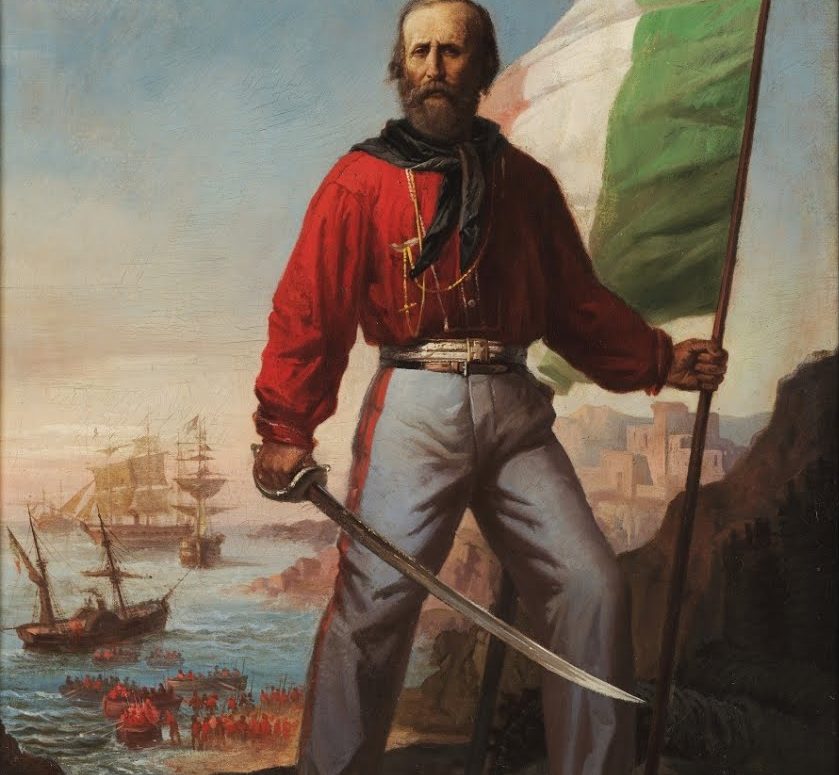
Ancient History augments the blending of the Simonetti, Attisani, and Vogel oral-history hand-me-downs with the events unfolding in Italy, Austria, and Greater Europe. Those governing originated in the Bronze Age: Anatolia, the Sea People, the Philistines, the Etruscans, Canaan, and Mycenaean civilisations. Biblical-scale events include the Exodus, Homer’s Troy, and the Jewish diasporas. The Roman Empire is brought undone by the Islamic Ottomans once the Crusades initiated by Pope Urban II fizzle out. Papal Rome’s misadventure leads to the ‘Great Schism’. Catholicism and Orthodox Christianity continue to reverberate through Eastern Europe. It is relevant to the Vogels’ initial migration to the Balkans following Austria’s reclamation of territories formerly under Ottoman rule. Dubious societal institutions vying for power delineate the spiritual and temporal boundaries. Galileo’s observations bolster heliocentrism. The French Revolution awakens egalitarianism and leads to demands for constitutional rights. Papal Rome dispels the idea of a Republic while fuelling the revolving-door occupations of the peninsula. In the South, earthquakes, feudalism, and brigandage leave permanent scars. Protestant England meddles to wedge out the French. The Mazzini-inspired adventurer Garibaldi unites Italia under the remnants of the Austrian-vassal Kingdom of Piedmont. Not everyone is pleased with the ‘fait accompli’.

Back-‘O’-Book 4: Chaos Nailed to Cobram

Joe’s loneliness, Caterina’s separation anxiety, and a mother’s burden to keep farms productive are the cracks that surface from life decisions made, glimpses of the effects that isolation has on immigrants.

Chaos emerges as Michele and Pietro make life decisions without fully understanding their effects on their families. Isolation grows into a range of social issues, affecting wives and children left behind for years. Such life choices unfortunately bring unintended newborns into a precarious future. Joe’s loneliness becomes evident as he tags along at workplaces with his father and uncle in Mossman and Cobram, towns barely past the pioneer stage. At nine years of age, Joe still can’t write coherent sentences; expression is a matter of cobbling phonetics and Italglishisms in in-class writing exercises. When his father Michele goes to Gundagai for the asparagus harvests, Joe is billeted out to Italian families. Migraines begin to affect his quality of life. For want of a mother, Joe finds escapism in ‘puppy love’ for les petites femmes. Scholarly arithmetic lifts his confidence. After five years, Maria Concetta decides that the family should reunite in Cobram. The catch is that she has parted with a child, but in 1961 she gains a larrikin half-Aussie-assimilated teenager; adjustments would have to be made. After 1962, high school gives Joe some advantage, but by ’65 he ponders whether there is something better than that bleak existence.

Back-‘O’-Book 3: Australia Beckoned

Italia, a broken nation, regroups under ‘La Prima República’ assisted by the ‘Marshall Plan’. The Simonetti-Attisani families stitch together plans to scale up crops for economic survival.

Rebuilding Italia’s political structures must contend with remnants of the ‘Resistance Movement’ more concerned with settling internal feuds. The Monarchy loses a referendum, ushering in ‘The First Republic’. In the South, landowners and the Mafia resist change. Fascism is not expunged, and the legacy public service hierarchy remains. The Marshall Plan and cheap hydropower are a godsend to the reconstruction. The Simonetti–Attisani families’ economic survival depends on regrouping to create whatever income they can from their farms. The limited success leads Michele and Maria Concetta to decide on a plan to create wealth in America, but it was to be Australia. In 1956, Giuseppe is sent to join his father, by then already working in the Australian cane fields; he is just eight years old. Southern Italy is put under a social magnifying lens to provide a baseline comparison to Scottish comedian Billy Connolly, and to writers Lawson, Patterson, Dennis, and Rudd’s descriptors of the ‘boosh’ that lies in waiting for newcomers. Walking from Bonegilla to Cobram, Franz Vogel sees much of it firsthand. Michele, Pietro, and newly anointed ‘Joe’ experience the East Coast doing the itinerant shuffle between Mossman and Cobram.

Back-‘O’-Book 2: Italia’s Nazi Pain

Mussolini rebrands Fascism as ‘República Socialista Italiana’ (RSI); however, the boilerplate signage is quickly engulfed by a duplicitous German plan to prevent it from building a strong army and to divert IMIs to armaments production.

With what’s left of the army dedicated to Fascism, Mussolini tows the German line. The Nazi’s ‘Final Solution’ is enforced in Greece and Italy. The King and Badoglio high-tail out of Rome, powerless to stop the civil bloodletting. Disease empties German concentration camps of Russian POWs; IMIs deprived of International Red Cross assistance move in. Italian Communists are ascendant and form the backbone of the ‘Resistance’. Women become the target of Allied propaganda urging activism to end the war. Michele is assigned to Junkers Werke Dessau; others are spread throughout Germany and occupied territories. Franz Vogel is forced at gunpoint to join the Waffen SS. Chetniks and Tito partisans vie for Allied recognition but act with impunity in genocidal killings. The war turns; Italians are vengefully massacred at Treuenbrietzen. The Vogels must move to Austria. The Allies target Dessau; IMIs become caught in the crossfire. Amedeo Usai provides eyewitness accounts of the bombings and eventual repatriation to Italy. Franz is sent to a Siberian Gulag as a reparation down payment to Russia. The controversy of the Italia North-South divide continues to contemporary times; the effect the war had is analysed from a broader international perspective


Back-‘O’-Book 1: Italia’s Fascist Bubble

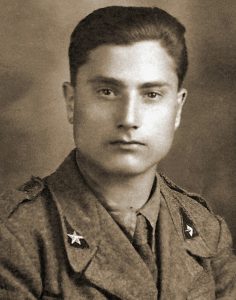
1942 Michele Simonetti 21 Years Old

Our roots for survival run deep through layers of genetics-driven ambition; what a thrill to peek backstage and discover who pulls the strings behind headlining events connecting generational handovers.

Leading up to WWII, which Italia joins to fulfil the misguided ambitions of the fledgling nation, Simonetti and Attisani families live through the abysmal functions of Bolshevism, Zionism, Fascism and Communism overseen by influencer Winston Churchill. Post-war immigration entangles Giuseppe in his father’s POW stories. To ward off complaints about the cold in the shacks they live in at Cobram, his father infuses conversations with quando io ero prigioniero di Guerra…. Anecdotes morph into a compendium of memories, later niggling with arousal, as he seeks closure over his father becoming one of the thousands of Internati Militari Italiani (IMIs) in Germany. Disastrous events ensue for Italians who willingly embraced the Fascist promise of glory. The North Africa and Greek campaigns bring the Simonetti brothers and Aussie Charlie Gilbert into the same theatre of war. Austro-German Vogels in Yugoslavia are part of Greater Europe’s troubled past, wherein ethnicity, Catholicism, Orthodoxy, and Islam bring out the worst of human behaviour. Diaries written by fellow travellers provide lucid accounts of the horrid fate of Italian soldiers post-Armistice. A massacre of Italians occurs at Cephalonia due to Divisione Acqui resisting German demands. Montgomery’s forces land near Pizzo and camp briefly near the Attisani Pontana farm.

Verified by MonsterInsights